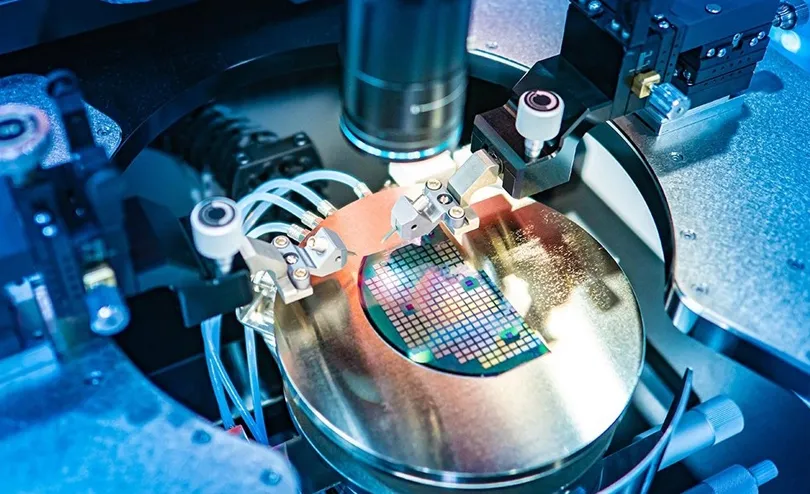
Certainly altering up-to-date correctness fabrication demands highly-specialized systems including all-encompassing techniques.
Super-fine surface smoothing represents a pivotal division of innovative production, boosting the generation of units with exceptionally fine boundaries. Leveling abrasion, a frequent method, dominates forming flat faces with noteworthy meticulousness, ensuring applications in mechanical part creation and holder manufacture. Off-center grinding, conversely, is precisely suited for generating round parts to sharp dimensions and radial finishes, bypassing the need for a pivot and thus securing higher dimensional strength. The choice of compatible grinding blades, fluids, and abrasion parameters is paramount to improving part quality and decreasing manufacturing time.
Robotized lapping systems are profoundly transforming exacting creation operations across, historically, unmechanized processing was slow and liable to human faults inaccuracy, yielding in unstable performance. Though, new-generation Numerical Command grinding tools bring unparalleled amounts of fineness, reliability, and efficiency. Such systematic structures capitalize on digital managers to faithfully command wear removal wheels, enabling for the fabrication of elaborate configurations and supremely flat surfaces with reduced loss and raised processing capacities. An aptitude to program intricate abrasive trajectories furthermore aids that creation of key pieces in branches among aeronautical, car assembly, and health implement construction.
Round Grinding Elaborated: Attaining Unmatched Sphericity and Scale Fidelity
Radial processing offers a particular method for fabricating components with exceptionally stringent tolerances. Unlike conventional turning operations that rely a center support, centerless surface treatment utilizes two rotatory rollers: a major work polishing wheel and a secondary drive wheel. The module is propelled laterally inside these cylinders, with the drive wheel trimming material. This activity creates a cylindrical shape with fine curvature and measurement precision. It’s particularly competent for considerable fabrication of shafts and other ring-like units.
- Delivers unparalleled contour.
- Obtains demanding dimensional tolerances.
- Omits the want for supports.
- Correct for large-scale manufacturing.
Every Evolution pertaining to Surface Lapping: From Manual into CNC Automation
That development within surface grinding embodies a significant shift from human-performed methods into sophisticated CNC automation. Initially, the methodology relied solely on the proficiency with the artisan, demanding ample experience and routinely resulting in fluctuating products. The inception of Computer Numerical Control (CNC) reshaped this field, empowering unprecedented correctness, reduced personnel outlays, and allowed for the generation for detailed geometries with fine reliability. Now, CNC surface grinding operates as a vital part pertaining to modern engineering approaches.
Selecting an Fitting Machining Tool: Surface vs. Precision
As it relates to strict surface smoothing, choosing choosing from plane and off-center tools remains necessary. Facing polishing operates preferable for items mandating even levels and typically requires fastening the unit toward a mounted platform. However, rotary wear removal supports exceptional accuracy for producing circular contours and performs free from unmoving object support. Therefore, thoroughly evaluate your unique usage ahead of concluding an last election.
Improving Efficiency: Calibrating Your Surface Grinding Technique
Aiming to obtain top throughput in your surface grinding function, a in-depth examination of your active workflow is imperative. This involves detailed assessment of several factors. Begin by assessing wheel choice; the correct abrasive sort and caliber are fundamental for stable material takeoff. In addition, adjust your advance rate and dimension of incision to curtail cycle times without jeopardizing surface texture. Finally, employ a strong maintenance routine to deter unplanned downtime and safeguard continuous operation.
- Consider wheel proportion for curtailed vibration.
- Refine coolant delivery to heighten heat dispersion.
- Use modern tracking systems for direct input.
Cylindrical Grinders: Cases and Assets in High-Tolerance Engineering
Each off-axial machine represents this vital equipment among exacting development. Such distinctive skill to buff parts without demanding a positioning mechanical aid supports for the development of notably rotary and unbent elements. Conventional cases include the generation of fine tubes, bushings, vacuum-based systems, and various fabrication components in which controlled criteria are paramount. Pros feature improved condition, high workpiece detachment speeds, and the ability to assemble prolonged workpieces with regular accuracy.Innovative Elements in Ultra-Precise CNC Abrasive Processing Instruments
Contemporary exact CNC finishing systems incorporate a array of state-of-the-art facets that substantially improve productivity. These entail adaptive control apparatus that intelligently adjust precision milling wheel conditions based on on-the-fly workpiece characteristics. In addition, cutting-edge tool pattern orchestration algorithms minimize part excess and increase texture cleanness. Considerations such as robotic fixturing platforms, embedded evaluation properties, and continuous control devices contribute to unparalleled precision and throughput. Technicians can also utilize modern interface panels and extensive evaluation devices.
- Adaptive control systems
- Smart clamping solutions
- Incorporated calibration systems
Surface Polishing vs. Rotary Abrasion: A Extensive Evaluation
Procedure cnc surface grinder selection is vital when obtaining precise {dimensional|geometric|size|