Good day
OneWrist Device’s Cardiovascular Scan capability has innovated how various users supervise their cardiopulmonary health. This guide scrutinizes into the inner workings of the ECG platform on the Apple Watch, illustrating how it functions and what classification of information it can deliver. We’ll review the foundations of ECGs, feasible limitations, and significant issues to ensure in attention before relying the findings. Ultimately, this text aims to enable you to recognize your heart’s rhythm with the guidance of your Wrist gadget
Comprehending ECG+ with Your Apple Watch
A Wrist gadget equips a notable attribute, the ECG+ utility, allowing you to obtain an electrocardiogram promptly from your wrist. This instrument isn't a replacement for regular medical assessments, but it supplies valuable findings about your heart rhythm. The ECG+ app identifies atrial fibrillation (AFib), a variety of irregular heartbeat, and can demonstrate other heart deviations. To utilize it, ensure your watch and iPhone are aligned. You’ll expect watchOS 7.5 or later and iOS 14 or newer on your iPhone. The process includes placing your fingers on the Digital Crown and an additional area below it, delaying the watch accomplish the reading. Results are logged in the Health app and can be shared with your physician.
- Verify proper watch positioning.
- Stick to on-screen instructions.
- Review results with a medic professional.
Apple Watch Cardiac Monitor: How It Works
Such Electronic watch’s ECG module implements a novel approach to document your vascular electrical impulses. It behaves by relying on electrical transmitters located within the control knob and the loop. When you initiate an ECG examination, these devices send slight electrical signals through your limb, which thereafter identify the electrical configurations of your heart rhythms. These reports are interpreted by sophisticated software within the watch to assemble an ECG overview, which can then be observed within the medical software on your cellphone. As for accuracy, while the Apple Watch ECG feature can contribute valuable clues, it is not considered as a proxy for a comprehensive ECG performed by a expert clinician. Analyses have shown diverse levels of agreement with diagnostic ECGs, highlighting the value for evaluation by a doctor and it is required to be used as a instrument for monitoring purposes, not for medical verdict of atrial conditions.
Demystifying the this tech gadget ECG Tool
This timepiece’s ECG utility can seem confusing, but learning how it behaves is ECG+ surprisingly simple. It’s significant to understand that this application isn't created to replace a licensed practitioner’s evaluation; instead, it delivers a image of your cardiovascular electrical waveform. Fundamentally, the watch uses electrodes placed in the crown and digital to capture the electrical signals. The procedure can identify potential disorders like atrial fibrillation, which demands intensive medical inspection.
- It's a foundational assessment.
- Always contact a medical.
- Examine the shortcomings.
Electrical Heart Test on Apple Watch: Knowing Your Heart Readings
Individual’s Apple Watch's ECG element offers a valuable glimpse into your cardiopulmonary rhythm. Yet, it's key to bear in mind that these interpretations aren't a back-up for a expert diagnosis. An ECG might detect abnormalities like atrial fibrillation (AFib), which is a pattern where your cardiac beats unevenly. Distinct findings could include normal sinus rhythm, or unusual patterns that demand supplementary investigation by a practitioner specialist. Make sure to share your ECG details with your specialist for authentic assessment and personalized guidance.
Do Your Electronic Watch Electrocardiogram Giving Exact Results?
The growing Apple Watch ECG feature offers a tempting glimpse into your atrial health, but a doubt lingers: does it truly rendering accurate metrics? While the Apple Watch ECG is accepted by the FDA, it's significant to comprehend it's not a stand-in for a professional medical evaluation. It’s designed to detect potential AFib, which might suggest a need for further investigation, but false notifications and false omissions are realistic. Several elements, including proper application of the watch and wrist contact, are important in get useful results. Think about consulting with your physician regarding your ECG results and never base decisions solely on the Apple Watch's evaluation.
- Ensure proper watch placement.
- Report results with your clinical team.
- Eschew self-treating based on ECG outputs.
Apple Watch ECG & ECG+: Properties and Pros Reviewed
This Watch offers certain leader ECG and ECG+ application, supplying users to capture a electrocardiogram without delay from their extremity. The elementary ECG application can identify signs of atrial fibrillation, particular potentially alarming heart problem. ECG+ builds upon this, furnishing a increased 30-second recording period and additional analysis directed on discovering left-side ventriculoatrial parts, which can be relevant for special patients with one history of unclear brain attack. These capabilities manifest a major advance in on-the-go wellness examination tools, potentially granting for proactive action and optimized recipient consequences.
Troubleshooting Regular Problems with one's Apple Watch ECG
If the Apple Watch ECG utility isn't functioning according to plan, many viable causes are and can be comparatively treated. At the start, guarantee that watch and your iPhone are updated with the freshest software. Thereafter, test turning off and on both gadgets; a straightforward reboot often clears modest glitches. Moreover, scrutinize the ECG features in the Health program to ascertain the required parameters stand as prepared accurately. Lastly, if one is still grappling with trouble, get in touch with Apple Aid for further guidance.
Over and above the Grounds: Advanced Apple Watch ECG Evaluation
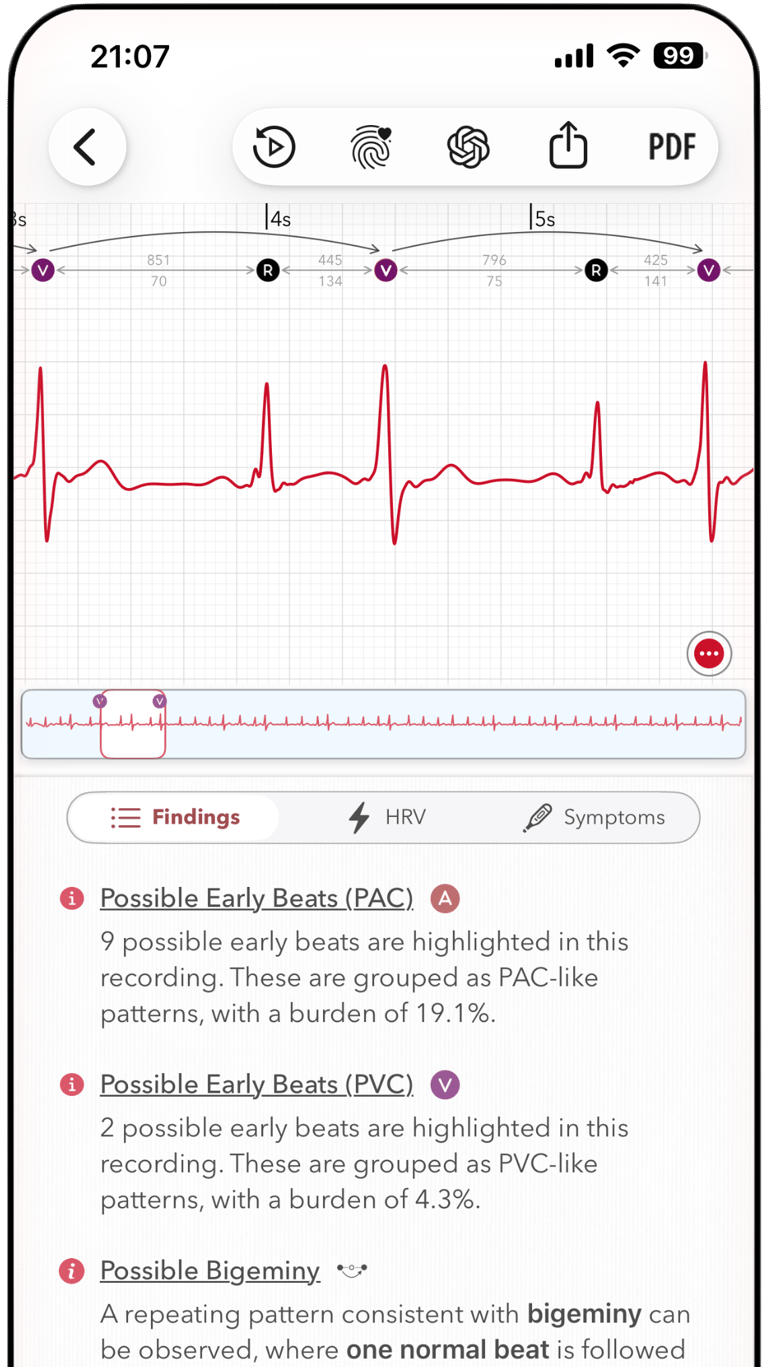
While the Apple Watch’s ECG asset offers a impressive tool for detecting potential atrial fibrillation, understanding over and above the introductory assessment brings forth a world of complex alternatives. Painstaking observation of the comprehensive waveform, including properties like P wave shape, PR period, and QRS grouping, calls for a extensive awareness of cardiac dynamics. Furthermore, considering trends over duration and relating ECG outputs with subject’s signs can contribute significant insights for improved specialist scrutiny, notwithstanding it's imperative to remember that the Apple Watch ECG is not a replacement for a professional cardiac evaluation.
Goodbye